PT-141 side effects: the tanning past is still here
Skin pigment is part of the story, but nausea was the problem that most often drove women out of the long-term study.
Skin darkening is a connection, not a coincidence
PT-141 grew from melanotan-II research that began with skin pigmentation. Bremelanotide acts on central receptors involved in desire, but it can also activate peripheral MC1R receptors involved in pigment production. The label warns about focal hyperpigmentation of the face, gums, and breasts.
That means darkening in particular areas, rather than a promise of an even tan. More frequent use increases the risk, and some changes may not resolve after the medicine is stopped. I regard the word “focal” as worth its place in this warning: a search for PT-141 skin darkening can make an unwanted effect sound like the old tanning goal.
Community posts also describe darker freckles or moles and gum changes. These are anecdotal accounts, not clinical evidence; they cannot establish a rate or identify the cause of an individual change. The label supplies the warning regardless of how popular those posts become.
Nausea dominated the longer follow-up
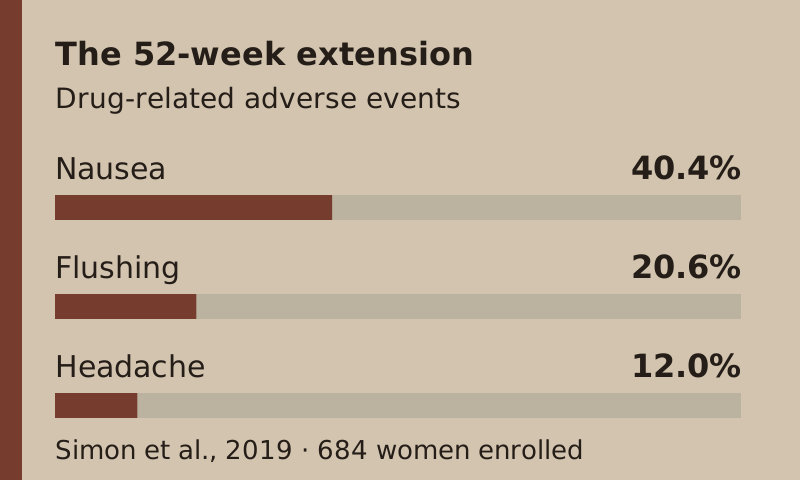
In the 52-week open-label RECONNECT extension, which enrolled 684 women, the most common drug-related adverse events were nausea (40.4%), flushing (20.6%), and headache (12.0%). Nausea was the principal tolerability problem and the leading reason women stopped.
I give stopping more weight than the reassuring sound of “no new safety signals.” Both statements come from the same follow-up. No newly discovered kind of harm is different from a medicine being easy to tolerate.
The broader clinical-development safety analysis also identifies nausea, flushing, and headache as the common problems. Vomiting, injection-site irritation, and nasal congestion are also concerns in the risk discussion. The published group rates cannot establish the severity of any one person’s experience.
The trials did not prove the exact bodily cause of nausea. Connecting it confidently to a particular mechanism would be more satisfying than the record permits. The rate is clear enough to discuss without pretending the mechanism is settled.
Blood pressure is a separate restriction
The label records transient blood-pressure increases with a fall in heart rate. It contraindicates use in uncontrolled hypertension or known cardiovascular disease. These are formal restrictions on use, distinct from uncomfortable sensations such as headache.
Ambulatory monitoring studied blood-pressure changes through the day. A brief increase need not announce itself with an obvious feeling. I would not use a person’s description of feeling normal to dismiss a measured pressure effect.
The cardiovascular restriction and the skin-pigment warning answer different safety questions. Neither disappears because a person reports stronger desire, or because the average trial benefit was statistically significant.
Other concerns need their own names
The LiverTox monograph describes mild liver-enzyme elevations and rare clinically apparent liver injury. That is a separate, uncommon signal rather than the central tolerability finding of RECONNECT. No controlled human pregnancy data establish safety for a developing baby, and breastfeeding safety is not established in the research assembled here.
Unregulated material adds another issue. Forensic analysis identified melanotan-II and bremelanotide in illicit samples. The case report of severe muscle breakdown and renal dysfunction concerned melanotan-II, not bremelanotide itself. I refuse to relabel that case as a PT-141 injury simply because the peptides are related.
The distinction cuts both ways: correcting the molecule’s name does not make unverified supply reassuring. Identity and concentration are different questions from the adverse effects of a known medicine. The dosage page explains why a volume without a known preparation cannot answer an injection question.